
A meeting starts at 9.00, the screen will not connect, remote attendees cannot hear the room, and five people spend the first ten minutes trying different cables. Most offices have lived through some version of that scene. It is exactly why av support services for offices matter – not as an optional extra, but as part of keeping the workplace functional, productive and easy to use.
For many organisations, AV is no longer limited to a boardroom projector and a speakerphone. It now sits across hybrid meeting rooms, collaboration spaces, room booking panels, interactive displays, wireless presentation tools and integrated audio. As these systems become more central to day-to-day work, the cost of poor support rises quickly. Meetings overrun, confidence drops, and internal IT teams are pulled away from other priorities.
The right support model does more than fix faults. It helps offices run consistently, gives users a better experience and protects the value of the investment already made in workplace technology.
What av support services for offices actually cover
There is a common assumption that AV support starts when something breaks. In practice, effective support begins much earlier. It includes monitoring system performance, responding to issues quickly, carrying out preventative maintenance, applying software and firmware updates, and making sure meeting spaces stay aligned with how people actually work.
That matters because office AV systems are rarely static. Video conferencing platforms change. Room layouts evolve. A meeting room that worked well for six people may struggle once it becomes a regular hybrid space for twelve. Without ongoing support, even a well-designed installation can drift away from user needs over time.
Good support also covers the human side. End-user training, clear room guidance and practical helpdesk assistance are often the difference between technology that looks impressive and technology that staff use confidently. A workplace does not benefit from advanced systems if users avoid them because they seem inconsistent or overly complicated.
Why office AV support is now an operational issue
In many UK organisations, meeting room technology has moved from a nice-to-have to business-critical infrastructure. Sales presentations, project workshops, leadership meetings, client briefings and hybrid team catch-ups all rely on rooms performing as expected. When that performance is unreliable, the problem is not technical in isolation – it becomes operational.
Facilities teams feel the impact because poor room performance affects space usage and employee experience. IT teams feel it because AV faults often land on their desk, whether or not they have specialist in-house capability. Leadership feels it when expensive workplace investments are underused or when hybrid working falls short of expectations.
This is why support should be viewed in the same way as other managed workplace services. The goal is continuity, not just repair. If a room booking panel is offline, a Teams room camera is not tracking properly or microphone coverage has degraded, the issue needs to be dealt with before users lose trust in the space.
The difference between reactive and proactive support
A reactive support approach sounds economical until the hidden costs appear. If support only kicks in after a failure, the business absorbs the disruption first. Meetings are delayed, staff waste time troubleshooting and confidence in shared spaces starts to erode.
Proactive support is different. It is built around reducing incidents, not simply responding to them. Remote monitoring can flag faults early. Scheduled maintenance can identify wear, connectivity issues or configuration drift before they become user-facing problems. Software updates can be tested and rolled out in a controlled way rather than after a platform change causes compatibility issues.
That does not mean every office needs the same level of service. A single-site business with a handful of rooms may need a more focused arrangement than a multi-site organisation with standardised meeting spaces across the estate. The right answer depends on scale, internal capability and how heavily the business relies on collaboration technology.
Where AV support services add the most value
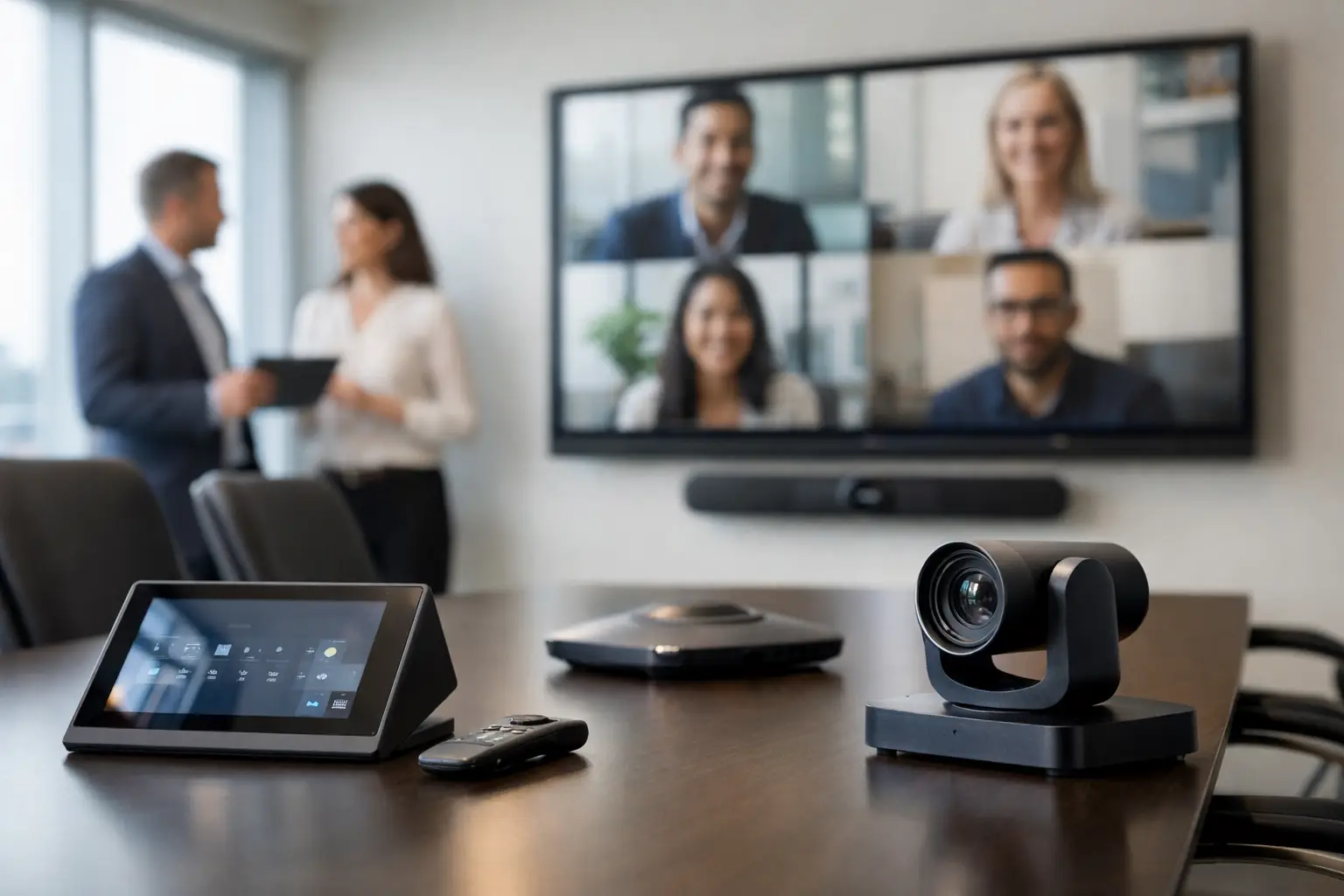
The most obvious area is meeting rooms, particularly those used for hybrid collaboration. These spaces often combine displays, cameras, microphones, speakers, control interfaces and conferencing platforms. When one element is not working properly, the whole experience suffers.
Boardrooms and client-facing spaces carry a different kind of pressure. In these rooms, reliability and presentation quality affect how the organisation is perceived. A poor audio experience during a leadership briefing or client session does more than cause frustration – it undermines confidence.
Open collaboration areas, divisible spaces, auditoriums and demo environments also benefit from specialist support. These spaces are more likely to involve integrated control, switching, multiple audio zones or specialist display technology. They may not fail often, but when they do, the impact can be significant and internal teams may not have the time or expertise to diagnose issues quickly.
Room booking systems and workplace scheduling tools are another often-overlooked area. If these are not maintained properly, the result is confusion around room availability, wasted space and unnecessary friction in the working day.
What to look for in av support services for offices
The best support partners do not just understand equipment. They understand office operations, user behaviour and the pressures on internal teams. That changes the quality of service significantly.
Responsiveness matters, but so does context. A support provider should know which spaces are business-critical, how systems are configured and what a realistic escalation path looks like. Fast response is valuable. Fast response from a team that already understands the estate is better.
It is also worth looking at whether support includes remote diagnostics, preventative maintenance, lifecycle advice and user training. If a provider only appears when a ticket is raised, there may still be gaps in service quality. By contrast, a consultative support model helps organisations plan refresh cycles, standardise rooms and make practical improvements over time.
There is also the question of accountability. Offices often end up with one supplier for hardware, another for installation and someone else handling support calls. When issues arise, responsibility can become blurred. A single accountable partner can reduce that friction and simplify decision-making.
Reducing pressure on internal IT and facilities teams
One of the strongest business cases for ongoing AV support is operational relief. Internal IT teams are already balancing infrastructure, security, end-user support and application management. Adding complex meeting room technology to that workload is not always realistic.
Facilities and workplace teams face a similar challenge. They are responsible for the quality and usability of the environment, but they may not have the technical resource to investigate recurring room issues or manage updates across multiple spaces.
A structured support service helps both teams. IT gains specialist backup for AV-related incidents and system performance. Facilities gains confidence that meeting spaces will remain usable and professionally maintained. The result is not just fewer faults, but clearer ownership and less time lost to avoidable troubleshooting.
For organisations going through workplace change, this becomes even more valuable. Office refurbishments, moves, policy changes around hybrid working and expansion into new sites all place extra demands on technology. Support should adapt with those changes rather than sit outside them.
Support is not only about faults – it is about adoption
A room can be technically functional and still perform badly if users do not understand it. This is one reason support should include training and practical guidance. Staff need consistent experiences across spaces, simple controls and the reassurance that help is available when needed.
Standardisation plays a major role here. If rooms are designed and supported around common user journeys, adoption improves. If every space behaves differently, support demand tends to rise. That is why the most effective providers look at usability alongside technical performance.
For many businesses, this is where a long-term technology partner adds the most value. The conversation moves beyond break-fix support to questions such as which room types are over- or under-performing, whether platform choices still fit the business, and how office technology should evolve over the next few years. TecInteractive works in that space – combining technical support with practical workplace understanding so organisations are not left managing disconnected systems and suppliers.
Choosing a support model that fits the business
There is no single blueprint. Some organisations need comprehensive managed support across multiple sites. Others need a dependable service desk, preventative visits and access to specialist engineers when required. The right model depends on the criticality of the spaces, the maturity of the estate and the capacity of internal teams.
What is consistent, though, is the need for support to be aligned with real business use. Offices rely on AV to help people meet, present, collaborate and make decisions. If those systems are inconsistent, the workplace feels harder than it should.
A reliable office should not require staff to become amateur technicians every time they enter a meeting room. With the right support in place, the technology fades into the background and people can focus on the work in front of them. That is usually the clearest sign the service is doing its job.