
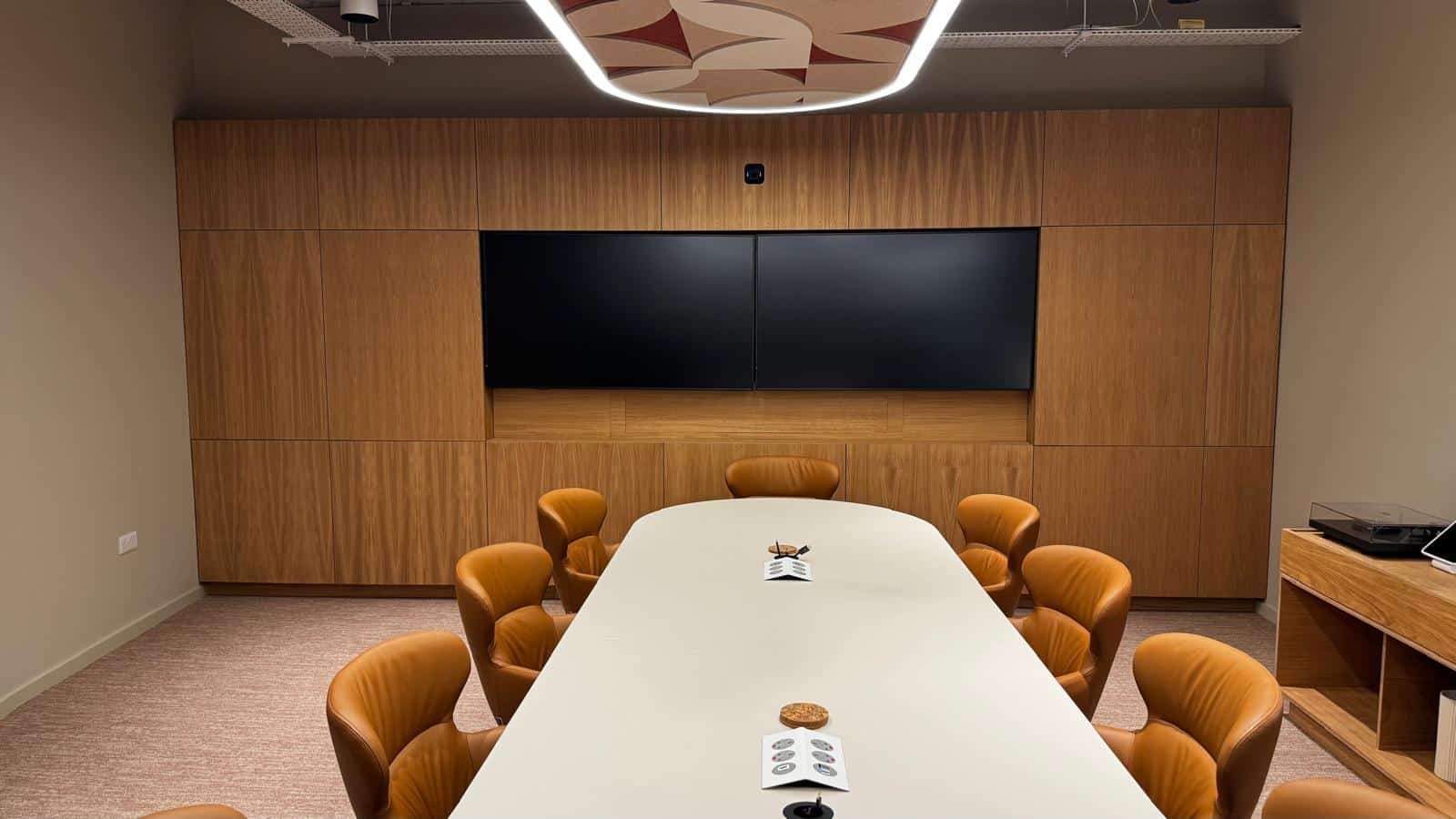
Audio visual (AV) technology has evolved from a ‘nice-to-have’ to become a business-critical component of the modern workplace. From global video calls, to all-hands hybrid town hall meetings, and seamless immersive client presentations, embedded AV systems are critical for how well teams engage and collaborate.
Here’s our step-by-step guide for successfully integrating new audio visual systems in your business.
1. Define Your Goals and Requirements
Before you consider brands or hardware, start with the why. Consider your overall business objectives. Are you attempting to drive internal collaboration, deliver high-impact content, or expand on hybrid meeting capabilities?
Obtain input from employees across all departments to ensure every need is included. For example, sales teams might require wireless presentation capabilities, while HR could be looking at town hall capability. Also think about how your AV system will serve you as your business grows or your workplace model shifts.
Having a clear vision ensures the system you roll out today won’t be outdated tomorrow.
2. Audit Existing Infrastructure
Next, evaluate your current meeting space, network bandwidth, and hardware. Test connectivity to verify that your network will support high-bandwidth video conferencing. Verify room layouts to see if the acoustics and lighting will be suitable for high-quality audio and video.
Identify any legacy hardware that can be reused or needs to be upgraded. This assessment avoids the high cost of unexpected surprises during installation and eases the integration process.
3. Choose the Right Partner
An experienced workplace technology solutions provider can take your requirements and convert them into a bespoke design with a workable installation plan that ensures minimum disruption to your business.
Check out recent case studies to make sure any potential partner has relevant experience. A seasoned provider will be familiar with the latest technologies such as interactive display screens, hybrid meeting rooms, room management systems and video conferencing systems, and be able to integrate new solutions with existing IT infrastructure. Critically, they will also be able to ensure that the recommended solution is scalable and can adapt as your business grows.
Prior to launch, your chosen partner should thoroughly test any new systems to identify possible problems by emulating real meeting conditions. For example, by checking that audio is crisp from all seats, video performance lives up to expectations for both in-room and remote attendants, and controls function just as they should.
Following go-live, they should be able to offer you a proactive maintenance and support plan. Proactive maintenance includes routine updates, remote monitoring, and rapid-response problem solving. This is important for avoiding downtime and safeguarding your investment in future. Also be sure to access user training, which is critical for successful adoption of your new technology.
4. Value User Experience
Invest in technology that is easy and intuitive to use. Choose simplicity with features such as one-touch start meetings, touch panels that are simple to use and neat installations that have minimal cables and wiring. Make the user experience consistent across multiple rooms or sites by going for simplified controls and operator interfaces.
Be sure to offer simple onboarding sessions and quick-reference guides to help all employees adapt to the new technology. A simple, frictionless experience leads to adoption and a better return on your investment.
5. Choose Future-Ready Technology
Invest in technology that is future-proof. Hybrid-ready equipment like high-resolution cameras, microphones, and displays make it simple to collaborate both in person and remotely. Wireless presentation tools like ClickShare or AirMedia allow for rapid sharing of content without messy cables.
Think about using room scheduling panels and occupancy sensors to maximise space utilisation and conserve energy when rooms aren’t in use. Select modular systems that can be upgraded as technology advances so your investment remains current.
6. Communicate the Change
Communication is key to the successful adoption of new technology. Highlight the benefits of new solutions for your employees, such as time saved, improved cooperation, and a better client experience. Keeping people informed early on drives adoption within the business.
Final Thoughts
AV systems form a strategic investment in the manner your business communicates and collaborates. With clear vision, specialised knowledge, and focus on user experience your audio visual systems can evolve from an assortment of standalone micro-solutions to a powerful collaboration engine that fuels business growth and innovation.